
Invoice Practice Quiz
Invoice Quiz: 20 Practice Questions for Beginners
How well do you know invoices? Let’s put your knowledge to the test!
In this video, I’ll test your knowledge of invoices with 20 multiple-choice questions. How many can you get right?
Here are twenty multiple-choice questions on invoices in accounting. How many can you get right? Grab your pen, play along and remember to share your score in the comments at the end.
What is the main purpose of a Traditional Invoice?
a) To provide a price estimate before work begins
b) To confirm delivery of goods
c) To request payment for goods or services provided
d) To record internal business expenses
What does “PO” stand for?
a) Payment Order
b) Project Outline
c) Purchasing Officer
d) Purchase Order
Which of the following is not typically included on a Quote?
a) A price estimate
b) A description of goods or services
c) A payment received confirmation
d) A validity period or expiry date
Who usually issues an Invoice?
a) The Buyer
b) The Seller
Who usually issues a Purchase Order?
a) The Buyer
b) The Seller
Who usually issues a Receipt?
a) The Buyer
b) The Seller
What is the typical order of the Sales Process?
a) PO → Quote → Invoice → Payment → Receipt
b) Quote → Invoice → PO → Receipt → Payment
c) Quote → PO → Invoice → Payment → Receipt
d) Invoice → Payment → Quote → PO → Receipt
Why do invoices have Invoice Numbers?
a) To calculate the tax on the invoice
b) To uniquely identify the invoice for record-keeping
c) To show the customer’s payment history
d) To confirm that the goods were delivered
“Net 7,” “Net 30,” and “EOM” are all types of ______. Can you fill in the blank?
a) Delivery schedules
b) Billing codes
c) Tax codes
d) Payment terms
“Net 30” means the invoice is due ______. Can you fill in the blank?
a) 30 minutes after it’s sent
b) 30 days after the invoice date
c) 30 days after the goods or services are delivered
d) On the 30th day of the month
What does "EOM" stand for?
a) End of Month
b) End of Margin
c) End of Monitoring
d) End of Measurement
When a business issues a sales invoice to a customer, which account increases?
a) Inventory
b) Expenses
c) Accounts Payable
d) Accounts Receivable
When a business issues a payment for a supplier invoice, which account decreases?
a) Inventory
b) Expenses
c) Accounts Payable
d) Accounts Receivable
What is the main purpose of a Credit Note?
a) To request payment from a customer
b) To confirm that goods have been delivered
c) To reduce the amount a customer owes
d) To record a new sale
Which of the following is not a valid reason to issue a credit note?
a) The customer paid earlier than expected
b) The customer was overcharged
c) Goods were returned or damaged
d) The wrong quantity was invoiced
A customer issues a partial payment for a sales invoice. How does this impact Accounts Receivable?
a) It increases
b) It decreases by the amount paid
c) It's fully cleared
d) It's unaffected until full payment is received
A business issues a Sales Invoice for work completed this month, but the customer will pay next month. Under accrual accounting, when should the revenue be recognised?
a) When the customer pays
b) When the work is completed
c) When the invoice is recorded in the accounting system
d) At the end of the tax year
A business receives a Supplier Invoice for services received the previous month, but will pay the supplier next month. Under accrual accounting, when should the expense be recorded?
a) When the supplier issues the invoice
b) When the business receives the invoice
c) When the business pays the supplier
d) When the services were received
A business accidentally overcharges a customer on a sales invoice due to a pricing error. What should they do to correct it?
a) Ignore it
b) Ask the customer to fix it on their end
c) Issue a credit note and send a corrected invoice
d) Wait until payment arrives to make adjustments
A business accidentally enters a Supplier Invoice twice in its accounting system. What problem does this create?
a) Accounts Receivable is understated
b) Accounts Receivable is overstated
c) Accounts Payable is understated
d) Accounts Payable is overstated
Bonus Question! Which two documents are commonly matched before approving payment on a supplier invoice?
a) Purchase Order and Invoice
b) Quote and Receipt
c) Invoice and Bank Statement
d) Receipt and Credit Note
Scroll down to see the answers.
All-in-One Accounting Cheat Sheet Bundle
Get the latest edition of my best-selling Accounting Cheat Sheets. This bundle is perfect for students, bookkeepers and small business owners who want to learn accounting quickly.
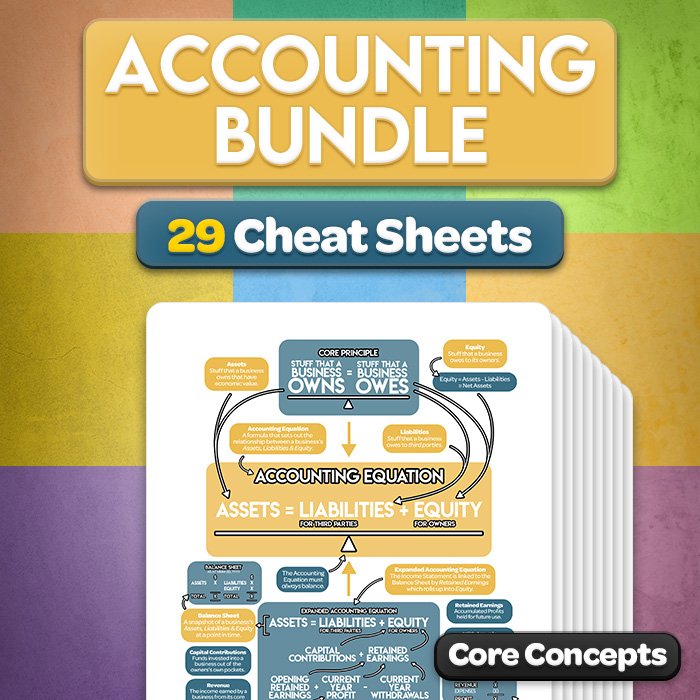
Get the latest edition of my best-selling Accounting Cheat Sheets in one powerful, money-saving bundle. Now updated in full color with improved layouts, reorganized sections and brand-new topics requested by learners.
Perfect for accounting students, bookkeepers, small business owners and independent learners, these one-page visual guides make complex accounting concepts easier to understand, review and remember.
All prices are in USD.
Invoice Quiz: Answers
Here are the answers:
c) To request payment for goods or services provided. An invoice is a request for payment. It also acts as an official record of the sale.
d) Purchase Order. “PO” is the initialism for Purchase Order.
c) A payment received confirmation. A quote outlines the estimated price and details of goods or services to be supplied, often with an expiry date.
b) The seller issues an invoice to request payment for goods or services supplied.
a) The buyer issues a purchase order to request goods or services at agreed prices and terms.
b) The seller issues a receipt to confirm that payment has been received.
c) Quote → PO → Invoice → Payment → Receipt. The seller provides a quote, the buyer sends a purchase order, the seller issues an invoice, which the buyer pays and then the seller provides a receipt.
b) To uniquely identify the invoice for record-keeping. An invoice number uniquely identifies an invoice so it can be tracked and referenced in accounting records.
d) Payment terms set out when a customer is expected to pay for goods or services.
b) 30 days after the invoice date. “Net 30” means the customer has 30 days from the invoice date to pay.
a) End of Month. “EOM” stands for End of Month.
d) Accounts Receivable. Issuing a sales invoice increases Accounts Receivable because the customer now owes the business money.
c) Accounts Payable. Paying a supplier invoice decreases Accounts Payable because the business no longer owes that amount to the supplier. It also decreases Cash.
c) To reduce the amount a customer owes. A credit note reduces what a customer owes.
a) The customer paid earlier than expected. Paying early doesn’t justify a credit note. Credit notes are issued for returns, refunds or errors.
b) It decreases by the amount paid. A partial payment reduces Accounts Receivable by the amount paid, and the remaining balance is left outstanding.
b) When the work is completed. In accrual accounting, revenue is recognised as it's earned, not when cash is received. This is called the Revenue Recognition Principle.
d) When the services were received. Under accrual accounting, expenses are recorded as they are incurred, not when cash is paid out.
c) Issue a credit note and send a corrected invoice. They should issue a credit note to reverse the incorrect amount and then send a corrected invoice.
d) Accounts Payable is overstated. Recording a supplier invoice twice overstates Accounts Payable because the business appears to owe more than it actually does. To correct the error, the duplicate invoice should be voided or deleted.
a) Purchase Order and Invoice. Matching the Purchase Order to the Supplier’s Invoice confirms the business is only paying for goods or services it actually ordered. It’s an important control that helps prevent overpayments and fraud.
How many did you get right? Let us know in the comments below.
Invoices: Video Tutorial
Invoicing is an essential part of any business, whether you're working for yourself or for a corporation. If you want to get paid you've got to know what an Invoice is and how to use it. In this invoice tutorial, you'll discover the key features of an Invoice template. Invoice number, date and amount? All of these terms will be explained in full.
In this short tutorial, I’ll teach you everything you need to know about invoices in accounting.